

Fun Fact Collection


Vendor: JMO

Vendor: JMO
Vendor: JMO
Vendor: JMO
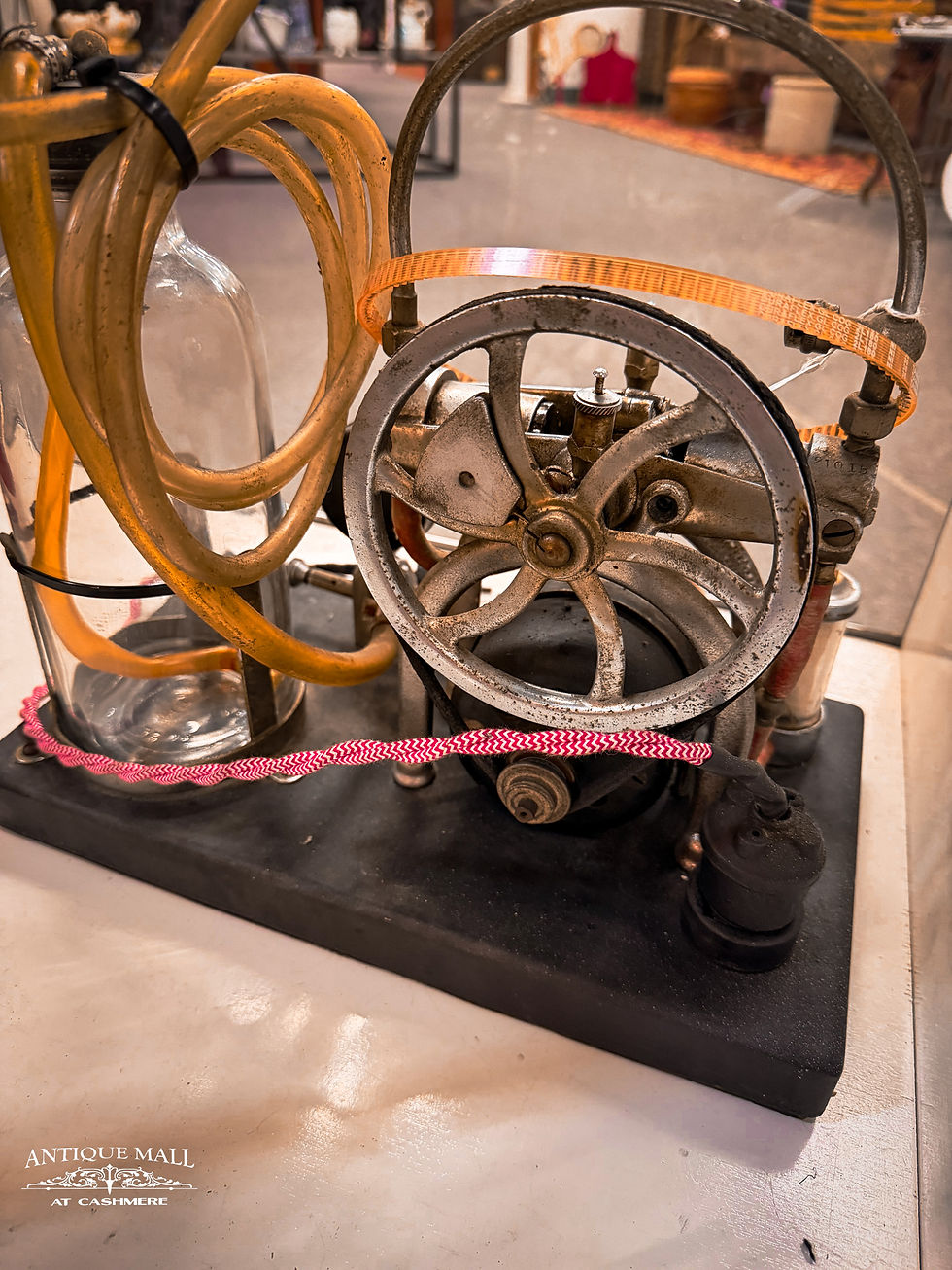
Embalming Machine
Would you ever guess what this strange-looking machine was used for?
Believe it or not, it is an early electric embalming pump, believed to date to around the 1920s.
Modern embalming became much more common in America during the Civil War, when preserving the bodies of soldiers made it possible to transport them long distances home for burial. By the late 1800s and early 1900s, embalming had grown into a professional trade, complete with schools, specialized chemicals and an increasingly impressive assortment of equipment.
And that brings us to this contraption.
Made by C.M. Sorensen Co., machines like this supplied the pressure and suction an embalmer needed to do the job. During arterial embalming, preservative fluid is introduced into the circulatory system while blood and other fluids are drained. Suction is also used during aspiration to remove gases and fluids from the body cavities. Before powered equipment, embalmers could accomplish these tasks with gravity, hand-operated pumps and bulb syringes.
The electric motor on this machine turns the large flywheel and operates the pump above it. The round gauge allowed the embalmer to monitor the vacuum, while the hoses connected the different parts of the system. That large glass bottle served as part of the vacuum system, acting as a reservoir or trap to keep collected fluids and moisture from reaching the pump.
C.M. Sorensen pumps from this era survive today in museum collections, auctions and, apparently, antique malls. Similar examples are generally dated to the 1910s through 1930s.
So the next time you see a mysterious antique covered in hoses, gauges and glass jars, just remember...
You may not want to ask where it has been.